

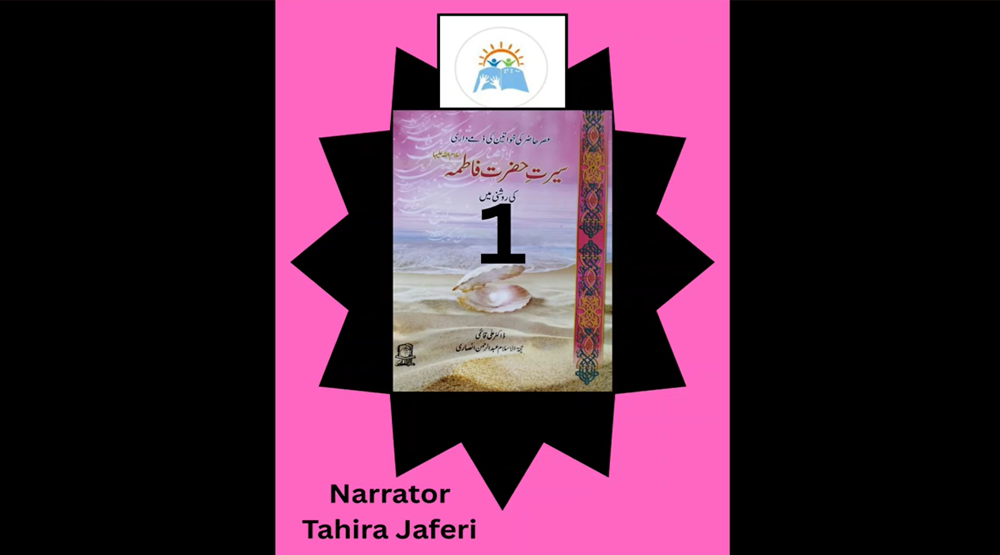


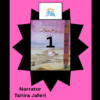
Asr-e Hazir Ki Khawateen Ki Zimma-Dari Seerat-e FATIMA ZAHRA S.A Ki Roshni Main – Part 1 of 2
• The book compiled by Dr. Ali Qaaimi and Hujjat-Ul-Islam Wal-Muslimeen Abd-Ur-Rahman Ansari argues that the life of Janab-e Syeda(FATIMA ZAHRA S.A) is not merely a historical event but a timeless “school of thought” that offers practical solutions to the identity crisis faced by modern women.
Dr. Ali Qaaimi-Ansari’s approaches the life of the Prophet’s daughter not just as a historian, but as an educator. The book acts as a bridge between the 7th-century Islamic ideal and the 21st-century woman’s lifestyle.
1. The Concept of the “Complete Woman” (Insan-e-Kamil)
The book begins by establishing Janab-e Syeda (FATIMA ZAHRA S.A.) as the pinnacle of womanhood. Dr. Qaaimi-Ansari’s emphasizes that she holds a unique position where she combines deep spiritualism with active social participation.
Modern women often feel forced to choose between being a “traditional home-maker” or a “modern working woman.” The book presents Janab-e (FATIMA S.A.) as the Third Model: a woman who is the axis of her home yet politically and socially conscious when society requires it.
2. Domestic Responsibilities: The Art of Family Life
A significant portion of the book focuses on her domestic roles, which Dr. Qaaimi and Ansari describe as the foundation of a healthy society.
• As a Daughter (UMM-e-ABEEHA S.A): The book details her supportive role toward her father, Prophet (HazratMUHAMMADS.A.W.W), showing how a daughter can be a source of emotional strength for her parents.
• As a Wife: It describes her marriage to (IMAM ALI A.S) as the perfect partnership. Key takeaways
o Simplicity (Zuhd): Managing a household with minimal resources without complaint.
o Emotional Support: Being the peace and comfort for her husband after his struggles outside.
o Mutual Respect: The dynamics of a relationship based on piety rather than materialism.
• As a Mother: Dr. Qaaimi-Ansari write extensively on her parenting style—raising leaders like (IMAM HASSAN, IMAM HUSSAIN, BIBI ZAINAB, BIBI UMM-e Kalsoom A.S) He highlights how she balanced affection with discipline and spiritual training (Tarbiyah).
3. Social and Political Responsibilities
The book strongly counters the narrative that Muslim women should be invisible or voiceless.
• Defense of Truth: The author analyzes Janab-e Syeda (FATIMA ZAHRA S.A)’s sermon (The Sermon of Fadak). He explains that when justice was compromised, she left the sanctity of her home to speak truth to power in the court of the Caliph.
The “Responsibility” mentioned in the title implies that modern women must be politically aware and ready to defend their rights and religious principles, provided they maintain their dignity (Haya).
4. Modesty and Hijab in the Modern Era
Dr. Qaaimi addresses the modern challenge of Hijab.
• He argues that Janab-e Syeda (FATIMA ZAHRA S.A)’s Hijab was not a barrier to her progress but a shield that allowed her to interact with society as a human being rather than an object.
• The book encourages modern women to adopt “internal Hijab” (modesty of character) alongside the physical veil.
5. Managing Hardships
The book discusses the immense grief and poverty Janab-e Syeda (FATIMA ZAHRA S.A) faced. Dr. Qaaimi uses this to teach resilience.
• For the modern woman facing depression, economic anxiety, or family strife, the book offers her life as a blueprint for patience (Sabr) and reliance on ALLAH (Tawakkul).
Why this Book is Important for the “Modern Age”
The phrase “Asr-e-Hazir” (Modern Age) in the title is key. Dr. Qaaimi contrasts the “Fatimi” lifestyle with two extremes:
1. Western Materialism: Viewing women as commodities or measuring success only by career status.
2. Rigid Backwardness: Denying women education or social rights in the name of culture.
The book concludes that the “responsibility” of today’s woman is to reconstruct her identity. She should be educated, socially active, and a strong pillar of her family, using the criterion of Janab-e Syeda (FATIMA ZAHRA S.A)’s life to judge her daily choices.
The book has been translated into Urdu language by Respected Mrs. Farah Naz Naqvi. While it has been proof read by respected Mrs. Nuzhat Saeed.
The reader of the book is respected MRS. Syeda Tahira Abbas Jafari. Who read it from the core of her heart for Kashana-e Baseerat.


